
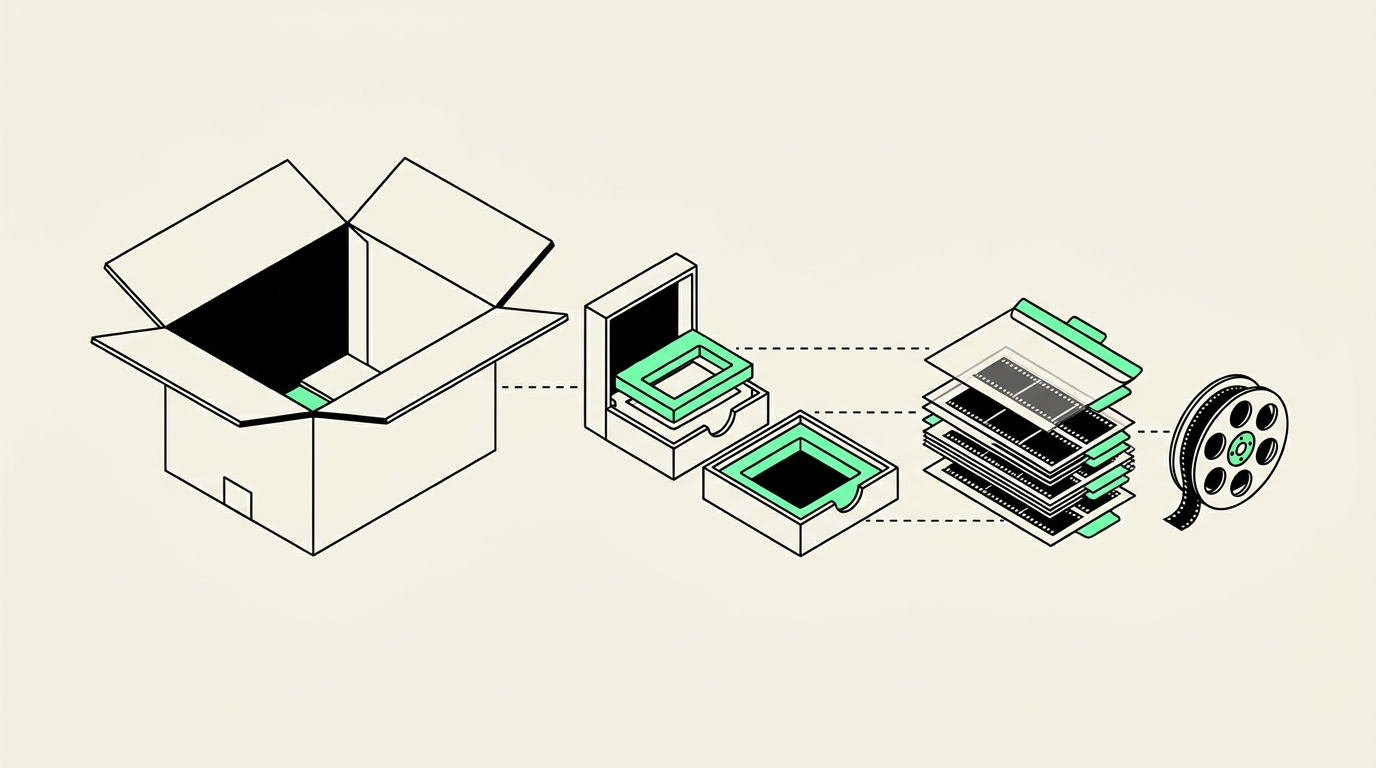
To safely ship old photos and tapes for digitizing, protect each format from bending, moisture, and movement, then pack everything in a sturdy corrugated box with cushioning on every side. Phoenix Scanning offers free prepaid shipping labels for mail-in customers anywhere in the US; if you are nearby, drop-off and local pickup are available in Chandler, AZ 85224.
Confirm the plan before packing
Start with a rough count of your prints, slide boxes, film reels, tapes, and discs. You do not need to count every photograph before asking for help, but knowing whether you have two albums or several cartons makes it easier to plan the shipment.
Use the quote builder to describe your collection, and check the digitizing services for the formats you want transferred. Before mailing anything unusual, ask how it should be packaged and whether it needs separate handling.
Also confirm how your originals will be returned and what shipping coverage applies. A prepaid label does not, by itself, tell you the insurance terms, return-shipping arrangements, or whether packing materials are included.
Protect each format before it goes in the box
Loose photos and photo albums
Keep loose prints in manageable groups inside photo-safe sleeves or clean photo-storage boxes. Support each group with rigid board slightly larger than the prints, without letting rough edges rub against the image surfaces. Avoid rubber bands, paper clips, and tape touching photographs.
Wrap albums individually and support their covers so they cannot flex. Do not pull photographs from sticky pages or tightly fitted corner mounts just to make the package smaller. Ask about intact-album handling first; forcing a print loose can tear it.
35mm slides and negatives
Keep mounted slides in secure slide boxes or trays rather than pouring them into a bag. If they are in a carousel, confirm whether it should be sent intact. A carousel needs its retaining mechanism secured and enough padding to protect its outer rim.
Leave negatives in their existing protective sleeves if the sleeves are intact and not sticking. Do not cut strips into individual frames. Support sleeved negatives between rigid boards, with no adhesive touching the film, and keep them away from loose grit or abrasive packing material.
VHS, Hi8, Digital8, and audio cassettes
Put tapes in their cases when available, then cushion the cases so they cannot knock together. For tapes without cases, wrap each cassette separately without pressing material into openings. Protect the hinged covers on video cassettes and the exposed tape area on audio cassettes.
Do not open cassette shells, pull out tape, or rewind everything solely for shipping. Keep any detached labels with the correct cassette in a separate sleeve or envelope. If a shell is cracked or tape is hanging out, flag that item before sending it.
8mm and Super 8 film reels
Keep film on its existing reel and use its protective can or box if sound and clean. Cushion each reel separately, especially around brittle plastic flanges. Do not tighten loose film by pulling the free end or apply household tape directly to the film.
If a reel has visible mold, damp packaging, or a strong vinegar smell, stop and ask for handling instructions. Do not mix questionable film into the shipment without letting the studio know.
DVDs and audio CDs
Use individual disc cases with secure center hubs whenever possible. Pad cracked cases or replace them before packing. Do not stack bare discs together or let them slide against cardboard; movement can scratch the recorded surfaces. Keep handwritten notes and original disc sleeves with the corresponding discs.
Build a package that cannot shift
Choose a sturdy box sized for both the collection and its cushioning. A padded envelope is not a good substitute for a box when shipping brittle reels, cassette shells, or bendable photographs. For heavier collections, several manageable boxes may be safer than one overloaded carton; confirm label arrangements first.
- Add a moisture barrier: Place dry, protected items inside clean plastic bags before adding outer cushioning. Never seal damp materials in plastic.
- Cushion every side: Pad the bottom, top, and walls. Separate heavy tapes and reels from delicate prints and negatives.
- Fill empty spaces: Use cushioning that stays in place. Avoid loose shredded paper that can scatter into cases and film containers.
- Check for movement: Gently tilt the closed box. If you hear or feel items shifting, add padding before sealing it.
- Seal securely: Tape the main seams with shipping tape and remove or cover old shipping labels.
Document the contents and limit heat exposure
Put a simple inventory and your contact information inside the carton. Photograph the contents and the packed box before sealing it, and keep the tracking number. An inventory helps identify a missing group without requiring elaborate labeling on every item.
For Phoenix and East Valley customers, avoid leaving packed media in a parked vehicle while running errands. Arrange your handoff before loading the car. For mail-in shipments, use a staffed carrier location when practical rather than leaving the box outdoors awaiting collection.
Common questions
Can I mail my collection from outside Arizona?
Yes. Phoenix Scanning accepts mail-in customers anywhere in the US and offers free prepaid shipping labels. Start with the quote builder to describe what you want digitized.
Should I take slides out of their carousel?
Ask before removing them. If the carousel will be shipped intact, secure its retaining mechanism and cushion it so slides cannot spill out.
Can I put different media formats in one box?
Yes, provided each format is protected separately and the box is not overloaded. Keep heavy tapes and reels from pressing against photos, negatives, or discs.
Can I avoid shipping if I live near Chandler?
Yes. Drop-off and local pickup are available in Chandler, AZ 85224. Call (480) 272-2447 during Mon-Fri, 9am-5pm, to coordinate your handoff.