Choose a photo and tape digitizing service that can explain how it tracks your originals, handles each format, checks the results, and returns your materials. Before committing a large collection, get a written scope of work and ask whether a small, representative test order is available. For Phoenix-area families, a convenient drop-off matters, but clear answers about handling matter more.
Start with who will handle your originals
A local address does not automatically mean every step happens at that location. Neither does shipping necessarily mean poor handling. The useful question is who takes responsibility for your collection from arrival through return.
Ask these questions before leaving a shoebox of prints or a bag of camcorder tapes:
- Where will each type of media be digitized?
- Are any items sent to another facility or subcontractor?
- How are my items identified and kept separate from other orders?
- Will the intake record show counts, labels, and visible damage?
- How will you contact me if an item needs special handling?
You do not need a complicated tracking system explained in technical language. You need a clear process and a record you can compare with the materials returned.
Check expertise for your actual formats
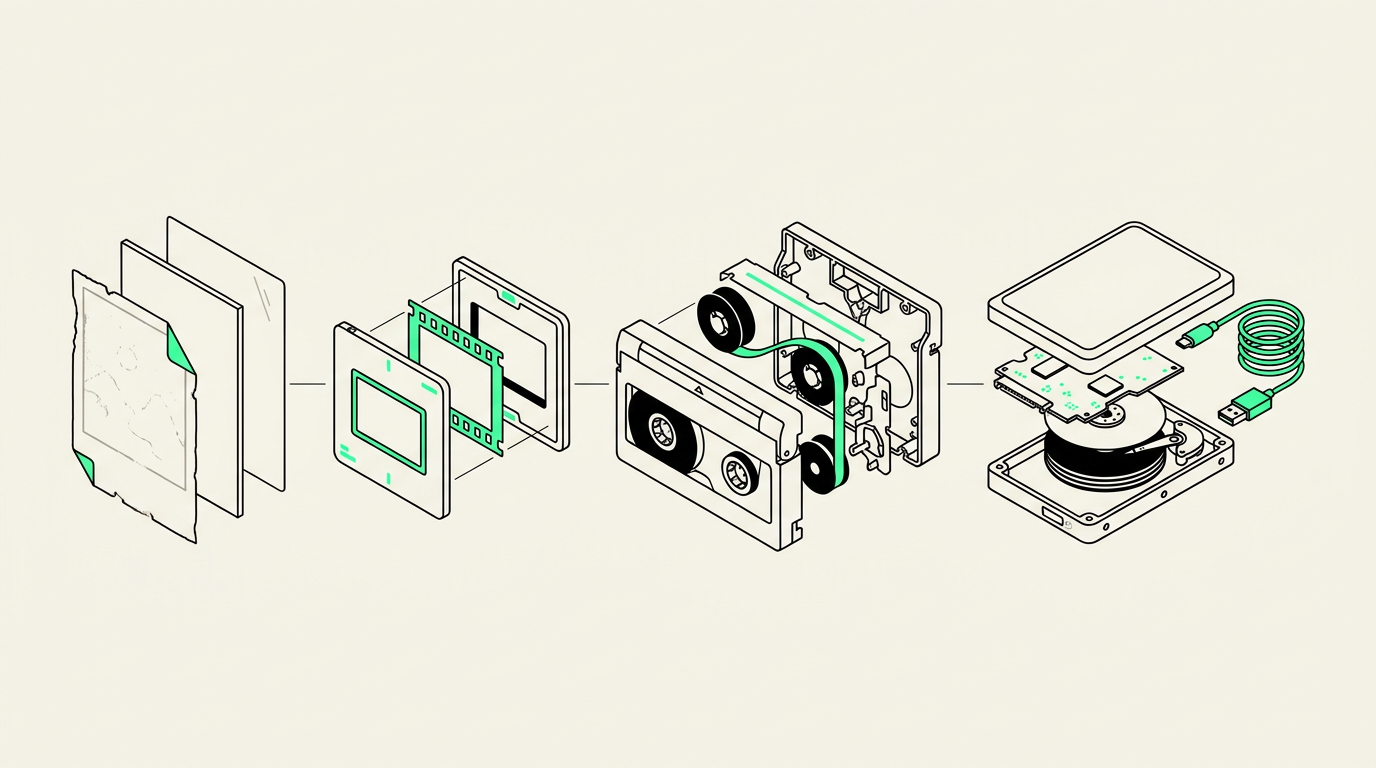
“We digitize everything” is less helpful than an explanation of how your particular media will be handled. Browse the provider’s digitizing services, then ask about anything unusual in your collection.
Prints, slides, and negatives
Ask whether prints are scanned loose or can remain in their current mounting, and whether handwritten backs require a separate scan. For 35mm slides, discuss carousel order and how orientation is checked. With negatives, ask how individual frames are separated and whether the quoted work includes basic color correction. Dust removal, extensive restoration, and ordinary scanning are different tasks; find out which are included.
Videotapes and movie film
Hi8 and Digital8 cassettes can look nearly identical, but their recording systems differ. A useful answer explains how the recording will be identified and played with compatible equipment, rather than relying only on the cassette’s label.
For VHS, ask whether the full recorded content is captured and how blank sections or playback problems are handled. For 8mm and Super 8 film, ask about frame-by-frame scanning, playback speed, reel sequence, and whether any soundtrack present can be captured. A provider should distinguish silent film from film carrying sound instead of assuming every reel is the same.
Audio cassettes, CDs, and DVDs
For audio cassettes, confirm that both sides are included and ask whether recordings are delivered as whole sides or separate tracks. For audio CDs, ask whether the original track boundaries are retained. For DVDs, confirm whether the disc contains playable video or stored computer files; those require different workflows. If a disc contains several recordings, clarify what will be included.
Ask what quality checking actually means
A transfer can produce a file without producing a good result. Ask whether quality checks include image orientation and cropping, audio presence, video playback, and signs of an incomplete capture.
There is an important difference between checking selected portions and reviewing every minute of a recording. Neither should be described vaguely as “fully checked” without explanation. Ask how unreadable sections, missing audio, or damaged frames will be reported, and what happens if you find a transfer error after delivery.
A realistic explanation of limitations is a good sign. Scanning cannot bring back detail that never existed, and playback equipment cannot always recover a deteriorated recording.
Use a small test order when the collection is large
If available, a test order lets you evaluate the result before committing decades of family history. Choose representative items: a faded print, a dark mounted slide, and a tape from the camcorder you used most often. Avoid judging the entire service from one unusually pristine photograph.
Open the delivered files on the devices you actually use. Check faces, edges, orientation, sound, and motion. Make sure you can locate each item without guessing. A test also reveals whether the provider’s communication and explanations work for you.
Get delivery, privacy, and pricing terms in writing
A useful estimate describes the work, not just a total. Confirm the following before authorizing the order:
- Scope: Which items, sides, frames, or recorded sections are included?
- Extras: Do cleaning, repairs, restoration, storage devices, or return shipping cost more?
- Delivery: What files will you receive, and how will you access them?
- Privacy: Who can access the recordings, and are download links restricted?
- Retention: How long are working files and download copies kept, and can deletion be requested?
- Corrections: What is the process for reporting missing content or transfer mistakes?
Do not assume “digital delivery” includes a USB drive or permanent online storage. If you want files on a portable hard drive, settle that before work begins.
Compare local convenience with clear accountability
For Chandler and East Valley customers, an in-person handoff offers a chance to discuss fragile items and confirm the order. Avoid leaving originals in a parked car while running other Phoenix errands, especially during summer.
Phoenix Scanning offers drop-off and local pickup in Chandler, AZ 85224, plus free prepaid shipping labels for mail-in customers nationwide. Start with the quote builder, or call (480) 272-2447 Monday–Friday, 9am–5pm, to discuss your collection and handling questions.
Common questions
Is a local digitizing service always better than mail-in?
No. Local service can make handoff and communication easier, but tracking, format expertise, quality checks, and clear return arrangements matter with either option.
Should I send my whole collection at once?
For a large or mixed collection, ask whether a small test order is available first. It lets you assess the files and communication before committing everything.
What should a digitizing estimate include?
It should identify the media and work included, delivery method, potential extra charges, and arrangements for returning originals. Ask how additional work will be approved.
How can I protect private family recordings?
Ask who can access your media, how digital files are delivered, and when retained copies are deleted. Discuss sensitive recordings before handing them over.