
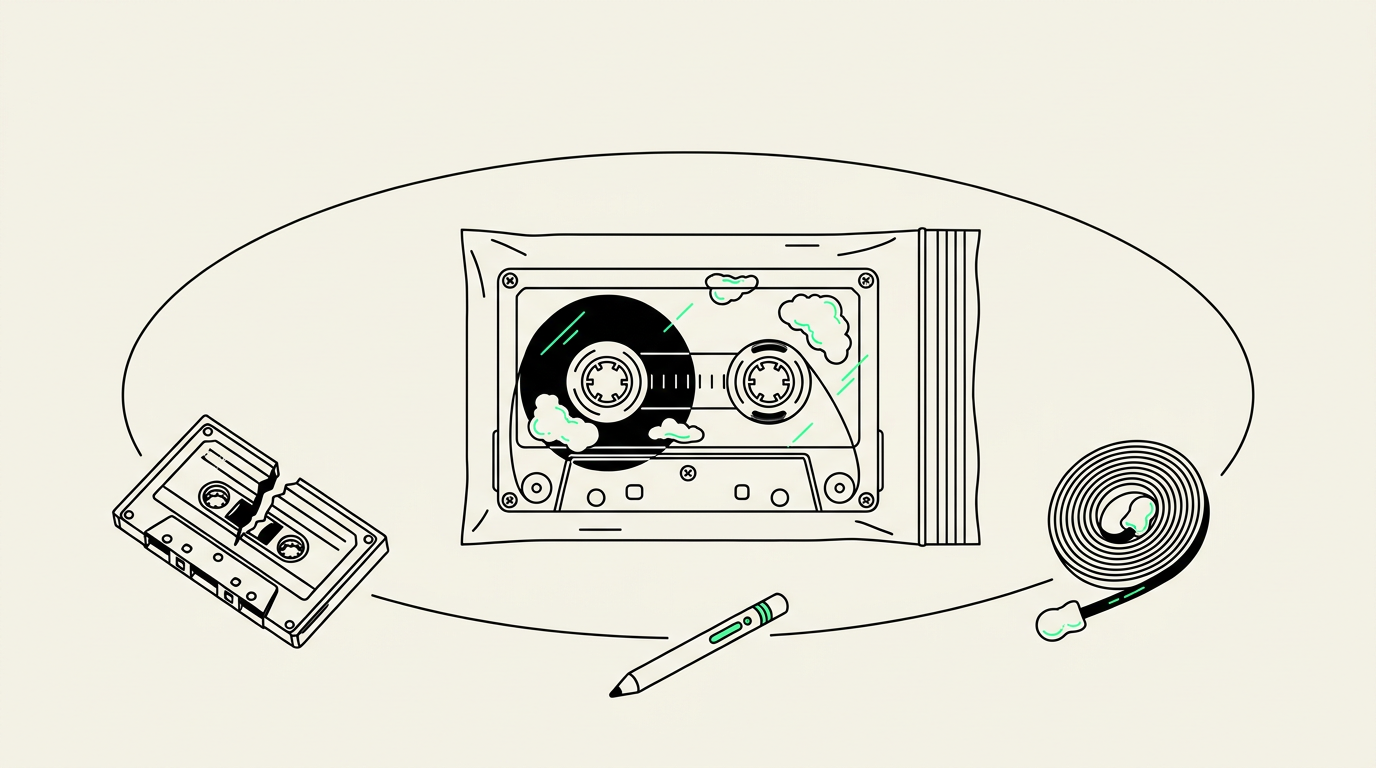
When it comes to moldy tape restoration, moldy or sticky VHS, Hi8, and audio cassettes require isolation in a sealed bag away from other media before any playback attempt. Mold spreads through VCR heads and contaminates entire collections. Phoenix Scanning's in-house Phoenix studio evaluates each cassette's condition. Digitizes recoverable footage, starting at pricing varies per tape, without shipping items to outside subcontractors.
What Should You Do Before Touching a Moldy Tape?
White, gray, or fuzzy material inside a cassette shell signals a stop-and-assess moment, not a load-and-play moment. Mold on a videotape damages the recording surface, contaminates playback equipment, and spreads to nearby tapes stored in the same box. Caretakers of family archives who spot these warning signs before reaching for a VCR protect both the footage and every other reel on the shelf. The steps below outline what to do before any hands-on cleaning begins.
- Stop immediately. Do not insert a moldy cassette into a player, even briefly, once white or fuzzy growth appears.
- Isolate the tape. Move it away from other cassettes, film reels, or photo boxes to prevent spores from spreading.
- Keep it cool and dry. Store the tape in a stable, low-humidity space rather than a garage or attic, one of the simplest tape mold prevention tips.
- Skip home cleaning attempts. Wiping or scraping the shell risks pushing mold deeper into the tape pack.
- Contact a digitizing specialist. Trained professionals can evaluate whether readable picture and sound survive.
Can a Moldy Tape Still Be Digitized?
Some affected tapes can be prepared and transferred successfully, though outcomes depend on how far the mold has spread. Phoenix Scanning handles every step of moldy tape restoration inside its own Phoenix studio, never outsourcing the work to an outside lab. That in-house control keeps original media in trained hands throughout the entire evaluation and transfer process.
How Do You Clean and Restore a Damaged Tape?
Recovery starts with an honest assessment, not a cleaning attempt. A moldy VHS tape is not automatically a lost cause. Many mold-affected cassettes can still be prepared and digitized by trained specialists. The outcome depends on two factors: how far the mold spread across the reel, and whether readable picture and sound survive underneath it.
Restoring a damaged tape follows a specific order for how to clean old tapes, and skipping steps risks the footage permanently.
- Isolate the affected cassette from other tapes to stop spore transfer.
- Assess the reel under proper lighting to gauge how far contamination has spread.
- Match the tape to the correct playback equipment — VHS, VHS-C, MiniDV, and Betamax cassettes run on professional-grade decks built to pull whatever picture remains before the oxide layer fails completely.
- Route Hi8, Video8, and Digital8 camcorder cassettes to calibrated 8mm decks instead of a standard VCR, since a mismatched deck damages both the tape and the machine.
- Play and monitor the full reel start to finish, rather than running an unmonitored batch pass, so any dropout or signal loss gets caught in real time.
- Capture the transfer to a digital file immediately, since a moldy tape's remaining playable window narrows with every pass.
Can a Moldy Tape Still Be Digitized?
Yes, in many cases — but not always. Specialists evaluate the extent of the mold and the condition of the recording surface before attempting any transfer. Heavily degraded tapes may only yield partial audio or video, while lightly affected ones often play back with minimal loss.
What If Mold or Stickiness Persists After Cleaning?
Persistent residue after a first cleaning attempt signals damage deep enough that home methods should stop. Uncertainty about the extent of contamination calls for isolating the cassette in a cool, dry space rather than risking further attempts at cleaning or playback. This step matters most for anyone weighing moldy tape restoration against the chance of losing footage permanently.
Can a tape still be saved after failed at-home cleaning?
Often, yes. Tapes too risky for home treatment can still receive careful, hands-on attention in a dedicated studio setting, where trained specialists handle every format in-house rather than passing cassettes through third parties. This matters for sticky shed tapes, where the binder layer breaks down and ordinary handling makes the damage worse.
Specialists follow a measured process to restore damaged tapes without additional harm:
- Isolate the cassette and confirm it stays cool and dry.
- Avoid inserting it into a player or attempting any cleaning at home.
- Hand it off for professional evaluation and hands-on treatment.
- Convert the surviving footage into a digital file once playback is stable.
Digitizing a fragile tape at this stage protects the recording from future mold growth, decay, or sudden playback failure. Finished files typically arrive through secure cloud links or USB flash drives, giving families a lasting copy no matter what happens to the original cassette.
Conclusion
In closing, moldy and sticky tapes represent a real threat to your memories, but they're not a lost cause. The key is acting quickly—don't let deterioration win. Whether you tackle gentle cleaning yourself or bring them to professionals who specialize in handling fragile media, the goal stays the same: preserve what matters before it's too late. Your treasured recordings deserve expert care. A second life in digital form, safe from the ravages of time and decay.