When it comes to library digitization, library and archive digitization services convert fragile paper records, photographs, film reels, and videotapes into secure digital files for institutional access. Phoenix Scanning performs all eight format conversions in-house at its Phoenix studio, never outsourcing collections, giving archivists documented handling procedures and dedicated project support for large-scale historical society and municipal records projects.
Why Trust Local Hands With Fragile Archives?
Chain-of-custody depends on knowing exactly where fragile materials sit at every stage of processing. Phoenix Scanning performs every digitization step inside its own Phoenix studio, keeping brittle photographs, warped tapes, and aging reels under one roof rather than routing them through a chain of subcontractors. For archivists managing donor-restricted collections or municipal records with legal retention requirements, that single-location workflow removes a major point of risk.
Materials never leave the country during processing, and no third-party vendor ever takes possession of them. That distinction matters for institutional preservation work, where a broken chain-of-custody can compromise provenance documentation or violate donor agreements. Trained professionals handle original media consistently, applying the same library media transfer procedures to every box, reel, or cassette that comes through the studio door.
Does in-house handling actually improve quality?
Consistency drives quality more than any single piece of equipment. When the same specialists manage archive scanning services from intake through final file delivery, calibration stays stable and handling protocols stay uniform across large collections. Institutional-scale digitization operations, including the Internet Archive, treat non-destructive, in-house processing as the baseline standard for responsible library digitization and digital archiving services.
What should curators ask before choosing a vendor?
Curators should confirm where materials physically go during processing. A studio that keeps everything local, with no outsourcing and no offshore shipping, gives collection managers a clear, verifiable answer.
What Formats Can Your Archive Digitize?
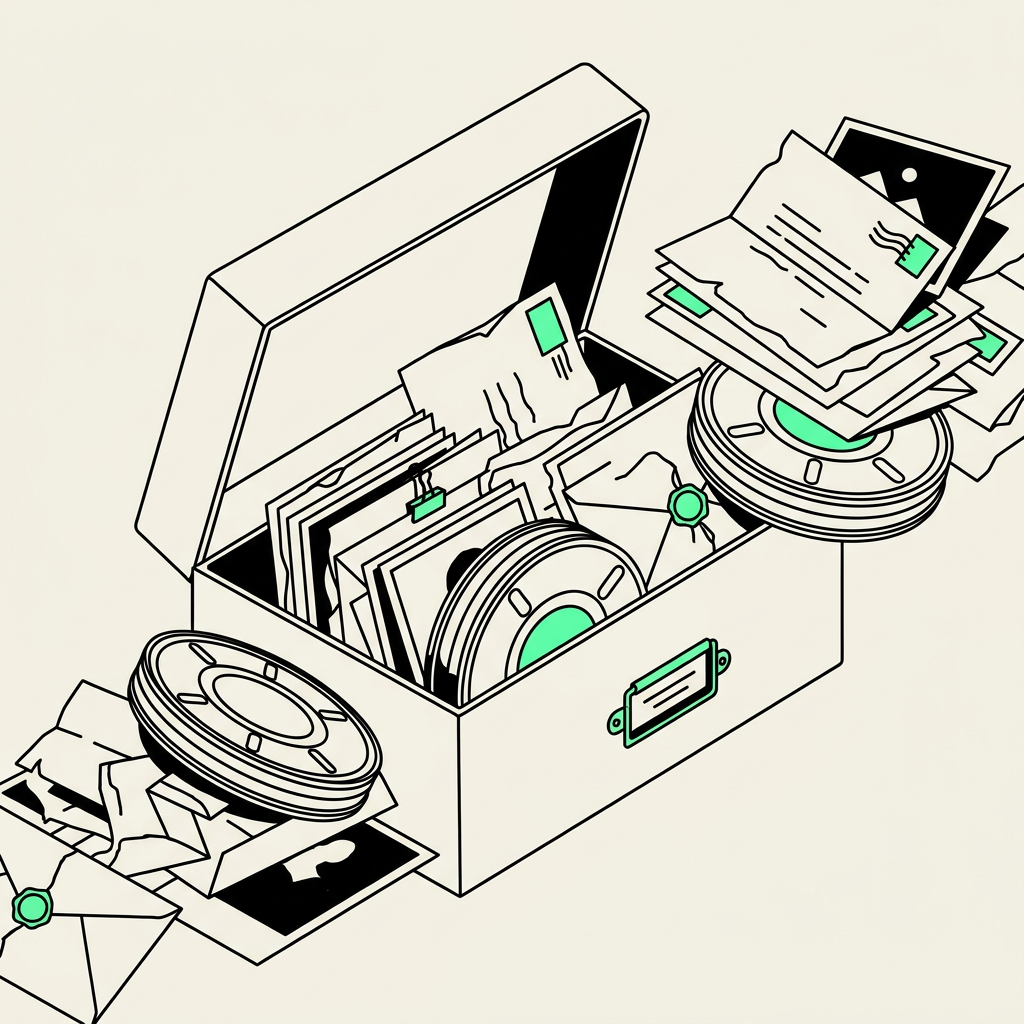
Photographs, slides, film reels, videotapes, audio cassettes, and CDs or DVDs all qualify for conversion into modern digital files. Special collections staff often hold materials spanning decades of institutional history, and each format carries its own risk of deterioration. Waiting means losing image quality, audio clarity, and in some cases the recording entirely.
Library digitization covers far more than paper documents. Reel-to-reel film and photographic prints move alongside magnetic tape formats, giving records managers one consolidated path for archive scanning services rather than separate vendors for each media type.
What video formats can an archive convert?
VHS, VHS-C, MiniDV, and Betamax tapes run on professional-grade decks built to capture whatever image remains before the oxide layer fails completely. Hi8, Video8, and Digital8 camcorder tapes — the compact silver cassettes common in institutional oral history projects from the 1990s — require calibrated 8mm decks and get processed one tape at a time, never batched.
Does institutional preservation cover fragile paper records too?
Archive holdings frequently include rare manuscripts, official records, fragile letters, and sound recordings. Each demands format-appropriate handling rather than a one-size-fits-all scan setting. This range supports institutional preservation goals for historical societies and municipal records departments alike. library media transfer and broader digital archiving services protect both moving image and paper-based history under one workflow.
How Do Institutions Scale Digital Archiving Projects?
Scaling happens through structured project management, not simply running more scanners at once. Larger organizational collections receive a dedicated project manager and documented handling procedures. Every box, reel, or folder moves through a traceable chain of custody. This structure matters most for institutions managing thousands of items rather than a handful of family keepsakes.
Phoenix Scanning built its archive scanning services around this reality. In-house teams handle both individual family collections and institutional archives, producing high-resolution output whether the source material is a single photo album or a municipal records room. The variety of formats is crucial for special collection librarians managing both donor materials and official files.
What Happens to Vital Records After Digitization?
Public agencies frequently need to open vital records to genealogists, journalists, writers, and historians long after the original scanning project wraps up. Historical societies, foundations, churches, and similar organizations face the same access demands. Planning for library media transfer at scale means building delivery formats that researchers can actually use, not just archive-safe storage.
How Are Finished Files Delivered?
Completed collections arrive through secure cloud links or physical USB flash drives, depending on institutional preference. This flexibility supports both:
- Remote research access for distributed teams or public patrons
- On-site storage requirements tied to records retention policy
That combination of documented handling, scalable output, and flexible delivery forms the backbone of dependable institutional preservation work and digital archiving services built for growth.
Conclusion
In closing, preserving your library's or archive's irreplaceable materials doesn't have to feel overwhelming. Phoenix Scanning brings together expert care, in-house precision, and scalable solutions tailored to your organization's unique needs. Whether you're safeguarding family histories or institutional records, you're entrusting your memories to trained specialists who handle every item with the attention it deserves. That's the difference between digitization and true preservation—and it's what sets the foundation for your collection's future.