
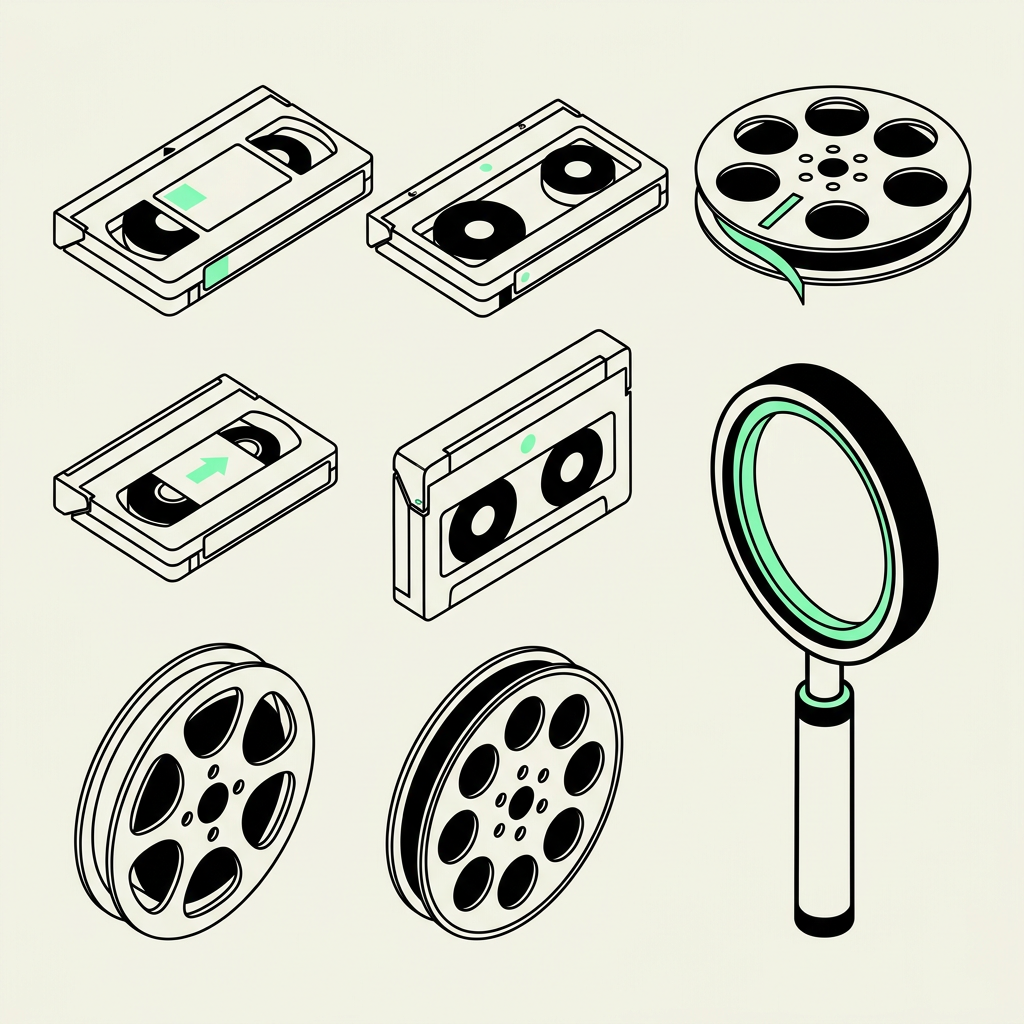
When it comes to identify tape format, unknown video tapes and film reels get identified by checking size, cassette shape, and labeling: VHS and VHS-C look like standard rectangular cartridges, MiniDV and Hi8 are smaller camcorder cassettes, and film reels show sprocket width (8mm, Super 8, or 16mm). Phoenix Scanning's in-house studio digitizes all eight formats, including Betamax and DVDs.
What Do You Need Before Identifying Your Tapes?
A clear, well-lit workspace and a sorting system come before any format guesswork begins. Old media boxes often mix videotapes, camcorder cassettes, and film reels together. Separating them by physical type is the first real task. Phoenix Scanning's in-house studio processes a wide range of formats, including film reels, VHS tapes, and other camcorder tapes, which means routing each item correctly matters from the start.
Before sorting begins, gather a notepad or phone camera to log labels, box markings, and handwritten dates. Lay items on a apartment surface rather than stacking them, since pressure can warp aging plastic shells and film cores. Group by rough category first — video cassettes, small camcorder tapes, and reels — before worrying about exact format names.
What if I can't tell what format a tape is?
Set unidentified tapes aside in a labeled pile rather than guessing what format is my tape and risking damage. Because Phoenix Scanning never outsources original media. Keeps every item within trained hands at its Phoenix studio, unsorted boxes stay safe until a specialist confirms each format.
Do I need special tools to sort my collection?
No specialized equipment is required for the sorting stage. A notepad, a camera, and a clean table handle the job, leaving the technical format work — and the eventual conversion into shareable digital files — to the studio itself.
How Do You Recognize VHS, Beta, and Camcorder Tapes?
Physical size settles most tape mysteries within seconds and helps recognize VHS vs Beta at a glance. A standard VHS cassette is large and rectangular. Betamax runs slightly shorter than VHS, and MiniDV and VHS-C tapes shrink down to compact, palm-sized formats. Sorting a shoebox of unlabeled tapes gets much easier once shape. Dimension become the first checkpoint, rather than guessing from memory or trial-and-error playback.
What if two tapes look almost the same size?
Cassette shells often carry printed branding or format labels, even when the outer case has gone missing. Checking the shell itself, not just the box, resolves most close calls between similar-sized formats and helps determine tape type with confidence. Manufacturers stamped format names directly onto the plastic in most cases. A close inspection under good light usually settles the question.
Camcorder tapes add another layer worth knowing. The small silver cassettes many households recorded on during the 1990s — Hi8, Video8, and Digital8 — form a separate family entirely from VHS. These require calibrated 8mm decks for accurate playback, since standard VCRs cannot read them.
Once a format gets identified, converting it becomes straightforward:
| Format | Recognized By |
|---|---|
| VHS | Large, rectangular shell |
| Betamax | Slightly shorter than VHS |
| VHS-C | Compact, mini-cassette size |
| MiniDV | Small, thin cassette |
| Hi8 / Video8 / Digital8 | Small silver camcorder shell |
VHS, VHS-C, MiniDV, and Betamax tapes all transfer into crisp, shareable digital video once sorted correctly, giving Phoenix families a clear path from a cluttered closet to a digital archive they can actually watch.
How Do You Identify Film Reels and Avoid Mistakes?
Reel width offers the clearest clue to a film's format. Most home movie collections fall into just three categories: 8mm, Super 8, or 16mm. A close look at the film edge and the frame size next to the sprocket holes usually settles the question. Families digging through attic boxes rarely need special equipment to identify film reel types. A magnifying glass and good lighting do the job.
What if a projector is already in the house?
Before threading any reel through an old projector, examine both the machine and the film itself. A projector that has sat unused for years may have worn gears or debris that shreds brittle film on contact. Testing condition first prevents a one-of-a-kind reel from being lost in seconds.
Steps for a safer check:
- Inspect the projector's lamp, gears, and rollers for dust, rust, or cracking.
- Examine the film for brittleness, warping, or a vinegar-like odor.
- Avoid running any reel showing damage through untested equipment.
Once a reel's format and condition are confirmed, Phoenix Scanning's specialists preserve the footage using professional-grade methods rather than risking it in a home projector. Every reel is scanned and reviewed inside the Phoenix studio. Fragile film never travels to an outside vendor for processing.
Conclusion
In closing, identifying those mystery tapes and reels is just the first step—the real work comes in preserving what's on them before time takes its toll. Once you've figured out what you're holding, you'll want to get those memories digitized sooner rather than later. That's where trained specialists who understand the nuances of each format make all the difference, handling your irreplaceable media with the care it deserves and transforming it into files you can actually enjoy and share for years to come.