
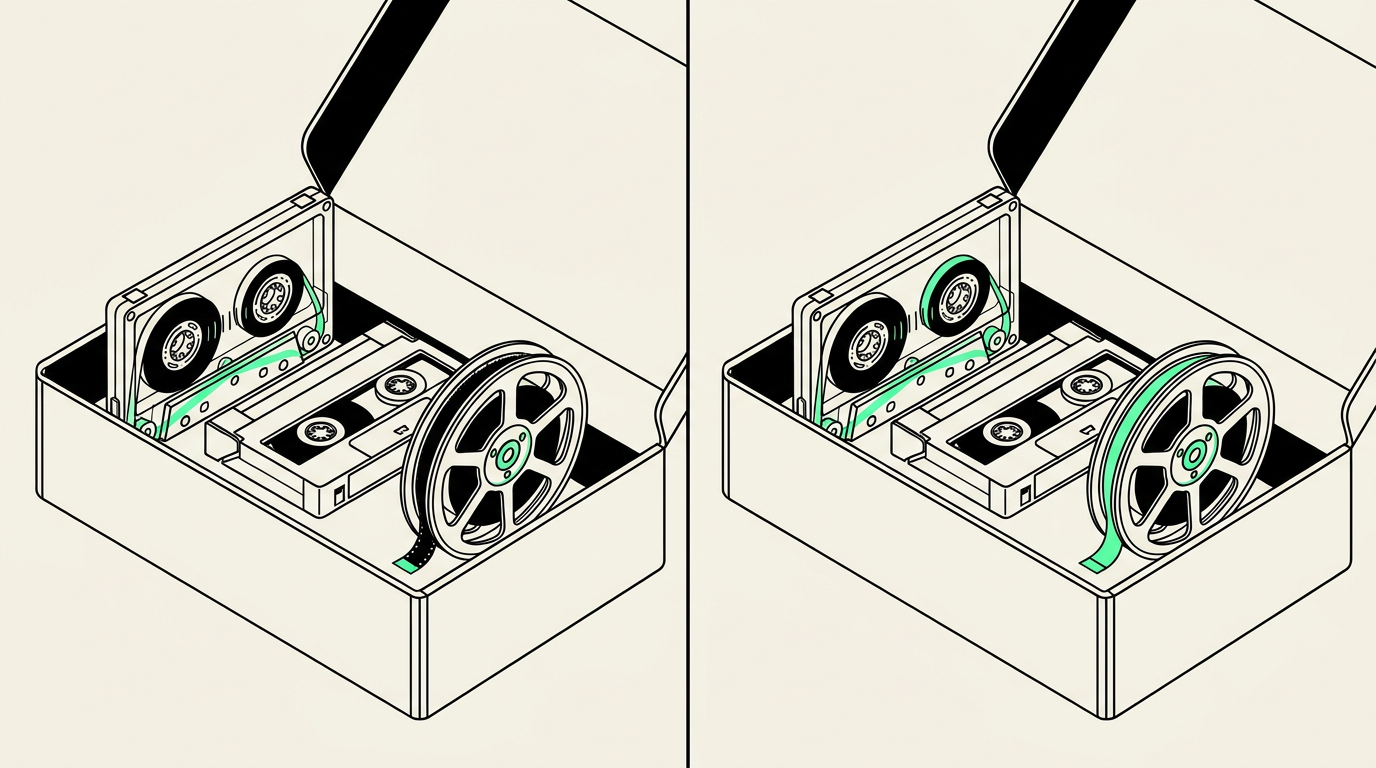
Digitize irreplaceable family recordings first, especially originals showing deterioration or stored in harsh conditions. Then prioritize media you can no longer play, while leaving stable photos with good duplicates for later. Anything moldy, brittle, or mechanically damaged needs a professional assessment before scanning or playback.
Choose by importance, condition, and access
You do not need to digitize the entire closet at once. A useful first batch protects memories that would be hardest to replace, not necessarily the oldest objects or the largest collection.
For each group of originals, ask three questions:
- Is this the only copy? A cassette of a grandparent telling stories usually deserves attention before commercially released music.
- Is there a reason to suspect deterioration? Heat exposure, visible damage, and previous playback problems all raise concern.
- Can anyone still access it? A box of Hi8 tapes without a working camcorder holds memories that the family cannot readily check or enjoy.
An item that meets all three conditions belongs near the top of your list. An upcoming anniversary or a relative who can identify people in the pictures can also move a collection forward.
Separate urgent assessment from urgent digitizing
Some originals should move to the front of the line for evaluation, not go straight into a machine. Mold, loose tape, stuck layers, or brittle film can make ordinary handling unsafe for the recording or the equipment.
Do not repeatedly test a troublesome cassette, force apart stuck photographs, or run questionable film through a projector. Avoid household cleaners, lubricants, and home baking methods. Describe the condition before bringing in or mailing affected items; ask what handling is appropriate and whether specialist treatment is needed.
Digitizing preserves what can be recovered now; it does not guarantee repair of existing damage. Keeping that distinction clear helps you make sensible choices without risking a one-of-a-kind original.
What deserves attention in each format?
Audio cassettes: prioritize unique voices
Family interviews, childhood recordings, spoken letters, and original performances are strong first choices. Their value may be easy to overlook because there are no visible pictures on the shelf.
If a cassette previously squealed, stopped turning, or came out of a player with loose tape, do not try several more decks. Note the symptom for an assessment. A purchased album that is still readily available elsewhere generally has lower preservation priority than an unrepeatable conversation.
Hi8, Digital8, VHS, and other videotapes
Move original camera tapes and unique family recordings ahead of television recordings or duplicate copies. If you have both a camcorder original and a VHS copy, identify the relationship rather than assuming both need to be transferred immediately. The original is often the better source, although condition matters.
Hi8 and Digital8 cassettes can look similar, and not every Digital8 camcorder plays analog Hi8 recordings. Owning a device that accepts the cassette does not necessarily mean you have a compatible playback system. Label an unknown tape as unknown rather than testing it in unsuitable equipment.
8mm and Super 8 film
Family film reels are often unique originals, making them good early candidates even if they appear intact. Reels with loose or broken sections, warped film, or a vinegar-like odor noticed during normal handling need assessment before projection.
A vinegar odor can indicate deterioration in acetate film. Do not deliberately sniff reels closely or attempt a projector test to find out whether they still work. Tell the studio about the odor before packing the collection.
Photos, 35mm slides, and negatives
Prioritize unique images with visible fading, color shifts, or vulnerable physical condition. Slides and negatives also move up the list when nobody has a way to view them, or when an older relative can still explain who and what they show.
Stable prints with copies shared across the family can usually wait behind unique recordings. But photographs stuck to album pages, glass, or one another need advice before removal. Do not turn a scanning project into a risky album-disassembly project.
DVDs and audio CDs
Home-recorded discs containing the only copy of a family event deserve early attention. A disc that once played but now skips or is not recognized needs assessment; repeated failed attempts are not a preservation plan.
Commercial music CDs are generally lower priority than unique audio recordings on recordable CDs. A disc containing photo files is also different from a DVD video or an audio CD, so explain what you believe is on it when requesting a quote.
Factor in Phoenix-area storage history
In Chandler and across the East Valley, an unconditioned garage, attic, or outdoor storage unit is a reason to move a collection up the list. Sustained heat can accelerate deterioration, even when the labels and boxes still look fine.
Storage history is a warning flag, not proof that an item is ruined. Move the collection to a stable indoor space, avoid unnecessary playback, and describe its history when asking about next steps.
Make the first batch manageable
Choose a small group with high personal value: a few interview cassettes, original camcorder tapes, or the earliest family film reels. Keep related originals together and explain which memories matter most. Review the digitizing services, then use the quote builder to plan a batch that fits your budget.
Phoenix Scanning offers drop-off and local pickup in Chandler, AZ 85224, plus free prepaid shipping labels for mail-in customers nationwide. For questions about questionable media before transport, call (480) 272-2447, Monday through Friday, 9am–5pm.
Common questions
Should I always digitize the oldest items first?
No. Uniqueness, condition, storage history, and access matter more than age alone. A newer cassette containing the only recording of a loved one may deserve priority over older photos with duplicates.
Should damaged media go into my first batch?
Put it first for assessment, not automatic playback or scanning. Describe mold, loose tape, stuck photos, or unusual film odors before bringing it in or shipping it.
What should I digitize first on a limited budget?
Start with a small group of irreplaceable originals, such as family voice recordings or original home movies. Stable items with good duplicates can wait.
Does garage storage mean my tapes are ruined?
No, but prolonged heat exposure raises concern and makes assessment more worthwhile. Move them indoors and avoid repeated test playback.