
Yes—many damaged photos, film reels, and tapes can still be digitized, but the chances depend on what is damaged and whether the original can be handled or played safely. Faded prints and worn tape cases are very different from mold, brittle film, or a snapped recording tape. Stop testing questionable items and describe their condition to a digitizing provider before bringing or sending them in.
What damage means for your digital copy
Digitizing captures information that remains on an original; it does not automatically restore missing information. A scratched photograph may scan successfully with the scratch visible. A videotape may transfer with occasional picture breakup, while a severely deteriorated tape may need specialist treatment before playback is possible.
Digitizing, physical repair, and digital restoration are separate tasks. Ask which are available and what the quoted work includes. Even when an item is recoverable, there may be limits to picture quality, sound quality, or the amount that survives.
For families around Phoenix, an attic or garage storage history is worth mentioning. Heat can warp plastic housings and accelerate deterioration, although age or storage location alone cannot tell you whether an item is readable.
Photos, slides, and negatives: leave stuck surfaces alone
Fading, color shifts, and minor surface scratches often do not prevent scanning. Torn prints may also be scannable if the pieces can be handled safely, though digitally rebuilding the image is a separate restoration decision.
- Prints stuck to glass: Keep the photograph and glass together. Pulling them apart can remove the image layer; ask whether capture through the glass or specialist separation is appropriate.
- Photos stuck together: Do not peel, soak, heat, or steam them. Water-damaged photographic surfaces can bond tightly.
- Curled negatives: Do not force them flat under heavy objects or apply heat. Tell the provider about curling, cracking, or stickiness.
- 35mm slides: Leave fragile slides in their mounts unless advised otherwise. Report spotting, warped mounts, or suspected mold before delivery.
Avoid household cleaners and aggressive rubbing. Loose dust is usually less serious than damage caused by an attempted cleanup.
VHS, Hi8, Digital8, and audio cassettes: avoid test playback
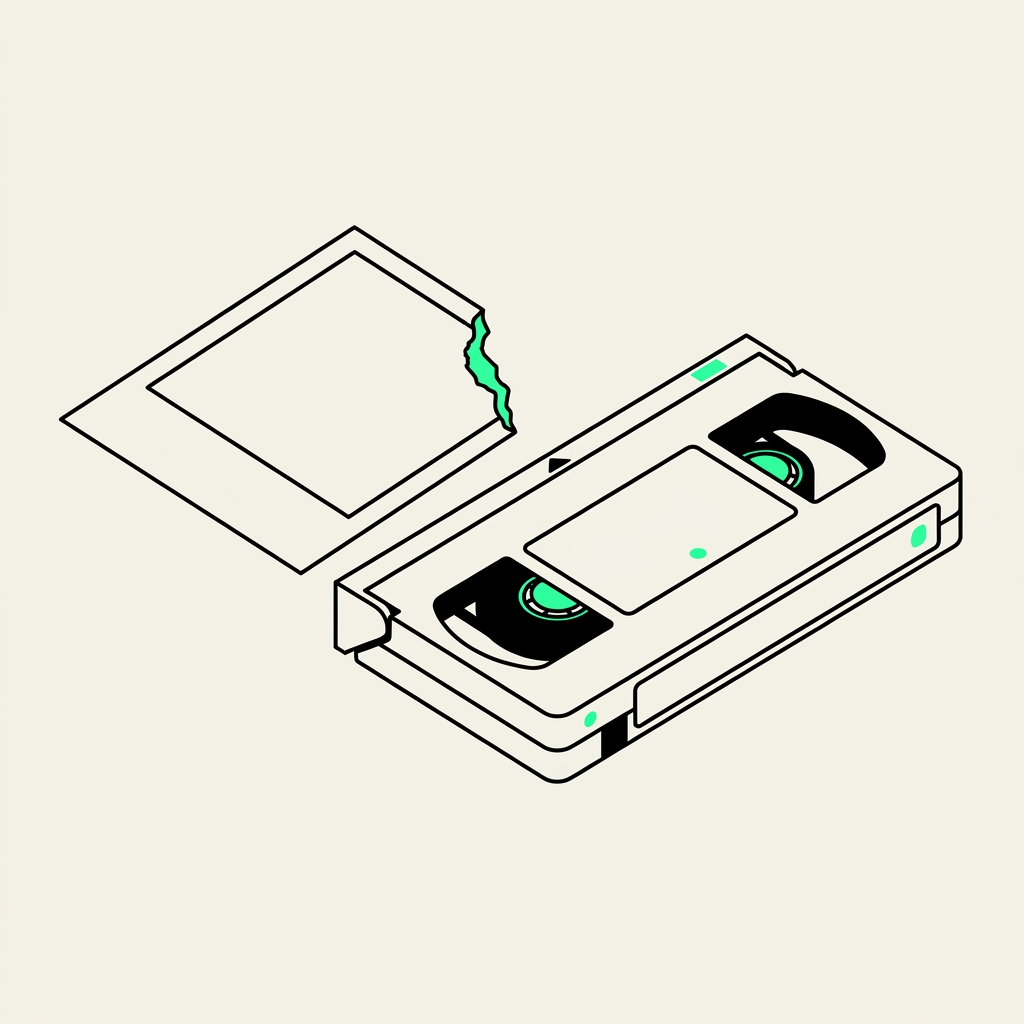
A damaged outer case does not always mean the recording is lost. Conversely, an intact VHS cassette can contain wrinkled, contaminated, or deteriorating tape. If you can see loose tape, unusual deposits, or damaged edges through the window, leave the cassette closed.
Do not repeatedly rewind or play a questionable tape. Playback can turn a weak section into a break, and contaminated tape can affect the playback machine. Stop immediately if a tape squeals, drags, or gets caught.
Hi8 and Digital8 use similar-looking 8mm cassettes but different recording systems. A failed playback attempt may reflect an incompatible camcorder rather than damage. Not every Digital8 camcorder plays analog Hi8 recordings, so share the original camera model if you know it.
For audio cassettes, loose tape, a missing pressure pad, or a cracked shell may require attention before transfer. Do not open the shell or splice a break with household tape. Ask whether the issue can be handled or needs a tape-repair specialist.
8mm and Super 8 film: check without unspooling
Old film can have failed splices, damaged sprocket holes, shrinkage, or brittleness. These problems matter because the film must move through scanning equipment; being able to see an image on a strip does not guarantee safe transport.
Inspect the reel and its container without pulling tightly wound film loose. If you notice a vinegar-like smell during ordinary handling, mention it. That odor can indicate deterioration of acetate film, not simply a dirty reel.
Do not run suspect 8mm or Super 8 film through an old projector to check the contents. Keep it separate from unaffected film and request handling guidance. Avoid oils, solvents, and home film-cleaning experiments.
DVDs and audio CDs: scratches are not all alike
A lightly scratched disc may still be readable, while a cracked or warped disc should not be spun in a drive. Damage to the label side of some CDs can affect the recording layer, so do not scrape it or attach adhesive repair patches.
A disc that fails in one player is not necessarily unrecoverable. For DVDs, an unfinished recording session or format compatibility issue can resemble damage. Mention whether the disc came from a home DVD recorder, computer, or camcorder, if known.
What to do before drop-off or shipping
Set questionable items apart and note visible symptoms without further handling. If you suspect mold, avoid brushing or blowing it off indoors. Ask for instructions before packing; wet items and contaminated materials need different handling from ordinary dry media.
Phoenix Scanning offers drop-off and local pickup in Chandler, AZ 85224, serving the East Valley and Phoenix metro, plus free prepaid shipping labels for mail-in customers nationwide. Contact us before sending visibly moldy, wet, sticky, or badly deteriorated media so acceptance and any specialist needs can be discussed.
Review the formats on our services page, then use the quote builder to start planning your project. For condition questions, call (480) 272-2447, Monday–Friday, 9am–5pm. Describe the format, damage, and any previous playback problems rather than testing the item again.
Common questions
Can a broken videotape still be transferred?
Sometimes, if the remaining recording tape is usable and the break can be repaired safely. Confirm whether repair is available before assuming a standard transfer includes it.
Should I clean mold off photos or tapes myself?
No. Brushing or blowing can spread spores, and cleaning can damage the recording or image surface. Ask for handling guidance before drop-off or shipping.
Will digitizing remove scratches and fading?
Not automatically. Scanning preserves the image that remains; correction or restoration may be separate work and cannot guarantee recovery of missing detail.
Can I mail damaged media to Phoenix Scanning?
Mail-in service is available nationwide with free prepaid shipping labels. Contact Phoenix Scanning first about mold, moisture, stickiness, or severe deterioration to confirm acceptance and packing guidance.